 Better Finance Info – Personal Finance & Investing Tips
Creating a budget is one of the most important steps toward achieving financial stability. However, many people struggle to find a system that is simple, effective, and flexible enough to fit their lifestyle.
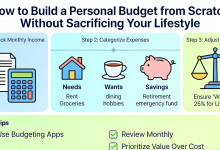
The 50/30/20 rule has gained popularity because it provides a straightforward framework for dividing your income: 50% for needs, 30% for wants, and 20% for savings or debt repayment. But is it really the best approach for everyone? In this article, we’ll break down the 50/30/20 rule, explore its pros and cons, and show you how to implement it successfully.
1. What Is the 50/30/20 Rule?
The 50/30/20 rule is a simple budgeting method introduced by Elizabeth Warren in her book All Your Worth: The Ultimate Lifetime Money Plan.
The basic formula:
-
50% Needs: Essentials you must pay for each month, like rent, utilities, groceries, transportation, insurance.
-
30% Wants: Non-essential spending that enhances your lifestyle, such as dining out, entertainment, vacations, hobbies, and subscriptions.
-
20% Savings & Debt Repayment: Includes emergency funds, retirement accounts, investment contributions, and paying down debt.
The 50/30/20 rule works because it is flexible enough for beginners while providing clear limits to prevent overspending.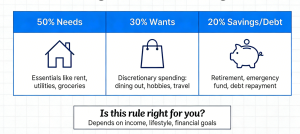
2. How to Calculate Your 50/30/20 Budget
To start, you’ll need to know your after-tax income, also called net income. Here’s a step-by-step guide:
-
Determine your net income – Include all income sources: salary, freelance work, dividends, etc.
-
Divide your income into categories
-
Needs = 50% of net income
-
Wants = 30% of net income
-
Savings & Debt = 20% of net income
-
Example:
If your monthly net income is $4,000:
-
Needs: $2,000
-
Wants: $1,200
-
Savings & Debt: $800
3. Examples of Needs, Wants, and Savings
Needs (50%)
-
Rent or mortgage
-
Utilities (electricity, water, internet)
-
Groceries
-
Transportation (fuel, public transit, car payment)
-
Insurance (health, auto, home)
Wants (30%)
-
Dining out or coffee shops
-
Streaming services & subscriptions
-
Travel & vacations
-
Hobbies & entertainment
-
Shopping for non-essential items
Savings & Debt Repayment (20%)
-
Emergency fund contributions
-
Retirement savings (401k, IRA)
-
Investment accounts
-
Paying off credit cards or student loans
4. Benefits of the 50/30/20 Rule
-
Simplicity: Easy to understand and apply for beginners.
-
Flexibility: Can be adapted based on income, lifestyle, or financial goals.
-
Encourages Savings: Ensures at least 20% of income goes to savings or debt repayment.
-
Promotes Balance: Allocates money for both essentials and lifestyle enjoyment.
5. Potential Drawbacks
While the 50/30/20 rule is helpful, it may not suit everyone:
-
High Cost of Living: In expensive cities, needs may exceed 50% of income.
-
Debt Challenges: If debt is high, allocating only 20% for repayment might be insufficient.
-
Individual Goals: Aggressive savings goals or early retirement plans may require adjusting percentages.
-
Irregular Income: Freelancers or commission-based workers may need a more flexible approach.
6. How to Adjust the 50/30/20 Rule for Your Life
Tips for customization:
-
High Living Costs: Reduce wants to 20% and increase needs to 60% if necessary.
-
Aggressive Saving Goals: Adjust savings to 30–40% by cutting wants.
-
Irregular Income: Calculate your average monthly income over 3–6 months, then apply the rule.
-
Debt Prioritization: Allocate more than 20% to pay off high-interest debt faster.
7. Tools to Help You Follow the 50/30/20 Rule
Budgeting apps and tools make following this rule easier and more accurate:
-
YNAB (You Need a Budget): Focuses on assigning every dollar a purpose.
-
Mint: Tracks expenses automatically and categorizes spending.
-
EveryDollar: Simple app for zero-based budgeting that can accommodate 50/30/20.
-
Spreadsheets: Google Sheets or Excel templates for DIY tracking.
You can link to these apps in your article to monetize through affiliate programs.
8. Real-Life Examples
Case Study 1: Emily, 28, Marketing Specialist
-
Net income: $3,500/month
-
Needs: $1,750 (rent, utilities, groceries, insurance)
-
Wants: $1,050 (dining out, travel, hobbies)
-
Savings: $700 (emergency fund, IRA)
Case Study 2: Jason, 35, Freelancer
-
Income varies $2,500–$4,500
-
Uses average monthly income $3,500
-
Needs: $1,750
-
Wants: $1,050
-
Savings: $700, supplemented during high-income months
9. Tips for Sticking to Your 50/30/20 Budget
-
Automate Savings: Set up automatic transfers to savings accounts.
-
Track Regularly: Review weekly or bi-weekly spending.
-
Cut Unnecessary Expenses: Cancel unused subscriptions, meal prep, shop smart.
-
Adjust When Needed: Life changes, adjust percentages but maintain balance.
-
Reward Yourself: Allocate some “fun money” to stay motivated.
10. Conclusion
The 50/30/20 rule is a simple and effective framework for managing your money. While it may not be perfect for every individual, it provides a balanced approach to cover essentials, enjoy lifestyle perks, and save for the future. By customizing it to your income, goals, and personal circumstances, you can build a sustainable budgeting system that supports both financial security and life enjoyment.